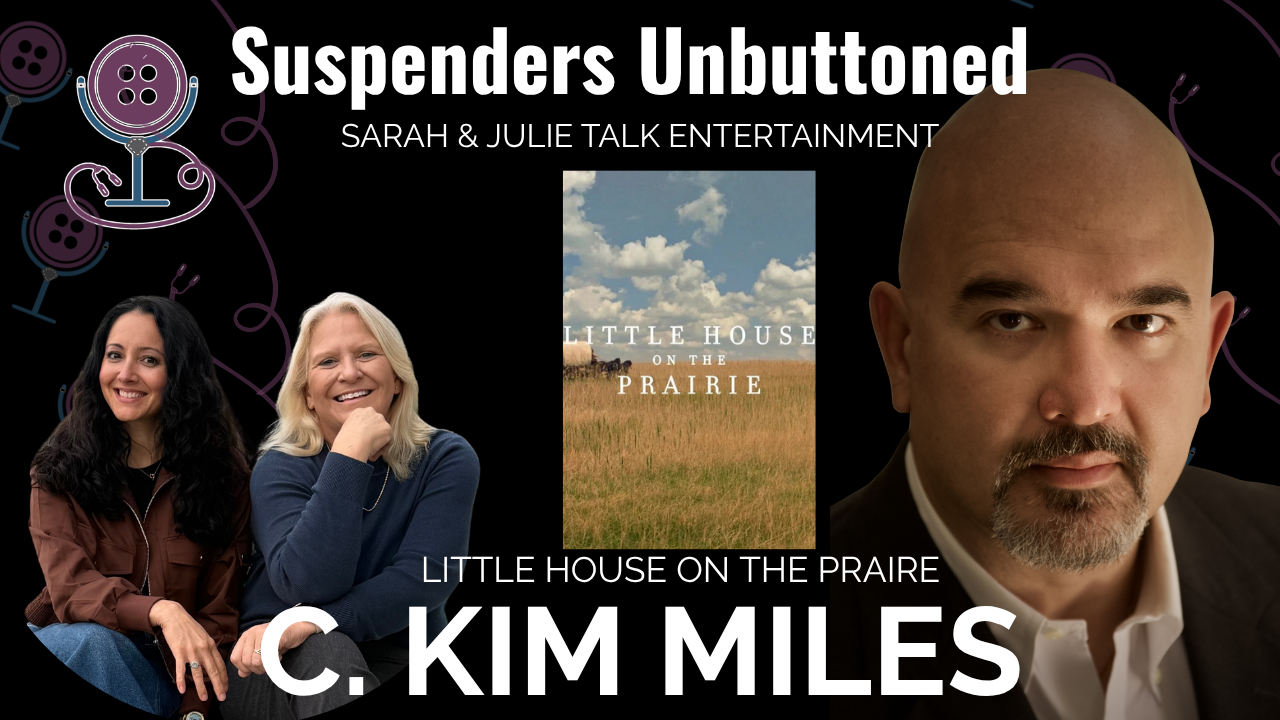
How Cinematographer C. Kim Miles Created the Visual World of Netflix’s Little House on the Prairie
Long before cinematographer C. Kim Miles helped bring Netflix’s Little House on the Prairie to the screen, the original television series offered him a window into another world.
Miles grew up watching the series in Malaysia, developing a personal connection to the Ingalls family and their life on the American frontier. Decades later, stepping behind the camera for Netflix’s new adaptation became an unexpected full-circle moment.
“The original show was kind of something that I’d grown up with. It’s always been dear to my heart.”
The wide-open prairie in the new series is more than a backdrop. It can feel beautiful and hopeful in one scene, exposed and unforgiving in the next. Creating that visual world required Miles and the filmmaking team to work with the landscape, weather, and changing daylight while never losing sight of the people at the center of the story.
Cinematographer C. Kim Miles, ASC, CSC, MYSC joined Suspenders Unbuttoned Media to explain how the production brought that world to the screen. Miles served as director of photography on four of the first season’s eight episodes, helping the series balance the intimacy of a family drama with the scale of a survival story set on the American frontier.
Netflix’s adaptation follows Charles and Caroline Ingalls, their daughters Laura and Mary, and their dog Jack as they leave Wisconsin and travel to Kansas in search of a new life. Inspired by Laura Ingalls Wilder’s semi-autobiographical books, the series also broadens its perspective to include the Osage people who have long called the land home.
A Full-Circle Journey to the Prairie
For Miles, this was not simply another period production. His memories of watching the original series gave the material an emotional history that stretched back to his childhood.
Growing up in Malaysia, the world depicted in Little House on the Prairie was far removed from his own surroundings. The series offered a glimpse of a broader world and helped make visual storytelling feel expansive and transportive. Joining the new adaptation allowed him to revisit that formative connection from an entirely different position: as one of the artists responsible for creating the world audiences would enter.
That personal history did not mean attempting to reproduce the visual language of the earlier television series. Instead, it gave Miles an understanding of why the story had endured and what it felt like to encounter the Ingalls family for the first time.
Letting the Prairie Shape the Image
Filming on an expansive outdoor set gave the camera something a soundstage could never fully reproduce: a genuine relationship between the characters and the horizon around them. It also meant surrendering a measure of control.
Weather, terrain, and the movement of the sun all affected what the production could accomplish during a filming day. Miles explained that the team planned carefully around the available light.
“We try to schedule our days so that we’re always looking into the backlight.”
Backlighting helped preserve the dimensionality and atmosphere of the landscape instead of flattening the actors against it. That approach demanded close coordination among the cinematography, directing, and production teams because the ideal light would not wait for the cameras.
The wind created another complication. The same movement that makes a prairie image feel alive can make period fabrics difficult to control.
“When the wind comes screaming through there, those fabrics get kind of challenging to deal with.”
Period wardrobe unexpectedly offered a practical advantage as well. Miles recalled the costume department finding a clever way to protect cast members from the insects and wildlife that came with working in the grass. It is the kind of behind-the-scenes problem audiences would never notice in the finished scene, but one that illustrates how every department had to adapt to the realities of the location.
The outdoor environment created logistical challenges, but it also gave the series a scale and authenticity that became essential to its visual identity. Viewers can feel the distances the characters must cross and how small a single family can appear against such an enormous landscape.
Finding Emotion Through Movement
Although cinematography is often discussed in terms of beautiful compositions and lighting, Miles’s work begins with character. The camera must do more than record a performance; it can help place viewers inside the emotional experience of a scene.
During our conversation, Miles discussed the influence of filmmaker Terrence Malick, whose work is celebrated for using natural light, movement, and landscape to create an almost subjective point of view.
“You almost want to translate the smells and the feeling of the breeze on your skin.”
For Miles, the ambition was not merely to show viewers what the prairie looked like. He wanted the images to suggest what it might feel like to stand there. That idea is especially important in scenes built around singing, dancing, and other moments when emotion is communicated through physical movement rather than exposition. Camera placement and motion can determine whether viewers feel like observers standing outside the scene or participants experiencing it alongside the characters.
The Magic of the “Amy Cam”
One of the production’s most distinctive creative tools grew from the work of camera operator Amy Belling. The team began referring to her intimate, instinctive camera approach as the “Amy Cam.”
The name describes more than a piece of equipment. It recognizes Belling’s ability to find emotionally revealing images from within a scene and respond to performers in the moment. Miles recalled watching her footage from the monitor and immediately recognizing that she had captured the perspective they needed.
The Amy Cam helped strengthen the audience’s connection with the performances and bring viewers closer to the characters’ perspectives. The technique reflects the larger philosophy behind the series’ cinematography: the camera should not simply document emotion from a distance. It should help the audience experience it.
Building the Little House on Camera
The construction of the Ingalls home carries enormous symbolic weight. It is not simply a building project. Every wall represents the family’s hope that this unfamiliar place can become a home.
Filming that process required the camera to capture physical work clearly while preserving the emotional meaning behind it. The production’s practical set also allowed exterior and interior photography to feel connected. Instead of the house appearing as one location from the outside and an entirely different space once the characters stepped through the door, the cinematography could preserve a stronger sense of geography.
That visual continuity matters because the house gradually becomes a place of shelter, struggle, and family memory. Its size, entrances, windows, and relationship to the surrounding land all help viewers understand how the Ingalls family lives within it.
Portraying the Land and Its History
Netflix’s adaptation expands the story beyond the Ingalls family to acknowledge that the prairie is already home to the Osage people. That broader perspective adds another responsibility to the visual storytelling.
The landscape cannot be photographed only as empty land waiting to be claimed. Its beauty exists alongside a deeper history and an established culture. Our conversation with Miles explores how the production approached that perspective with care, balancing the grandeur expected from a frontier story with the knowledge that different communities experience the same land in profoundly different ways.
That distinction is crucial to the series. A sweeping landscape can communicate freedom and possibility from one character’s perspective while representing home, history, and impending displacement from another.
Lighting Fire and Creating a Sacred Space
ome of the most demanding sequences required the team to photograph fire on a large scale. Fire produces its own moving light, but that does not mean a cinematographer can simply point a camera toward it. Exposure, safety, continuity, smoke, and the visibility of the performers all must be controlled while preserving the unpredictability that makes fire feel dangerous.
Miles discussed the techniques used to build those sequences visually and how lighting could support their emotional meaning. In another key scene, he described the choice to light from above:
“Lighting everything from above to create a sacred space.”
The description reveals how a technical decision can carry narrative meaning. Light does not merely make a scene visible. Its direction, softness, and contrast can quietly tell viewers how a moment should feel.
That approach was especially meaningful during the final town celebration. The scene needed to accommodate a larger group of performers while still preserving individual emotional beats. The lighting and camera coverage had to give the event a sense of community without losing the personal stories unfolding within it.
Cinematography in Service of Story
Across the interview, Miles returns to an essential idea: the most effective cinematography is not simply beautiful. It places viewers inside the story.
Natural backlight helped define the prairie. More intimate camera techniques brought the audience closer to the characters. Overhead lighting transformed a gathering place into something sacred. Large-scale fire sequences conveyed physical danger, while quieter compositions allowed emotion to live in a face, a gesture, or the space between people.
Together, those choices help Netflix’s Little House on the Prairie feel expansive without losing its emotional center.
How Digital Filmmaking Changed the Possibilities
Miles also reflected on the industry’s shift from shooting on film to working digitally. Film once imposed a natural limitation on how long the camera could continue rolling and how much material a production could capture. Digital cinematography provides filmmakers with far greater flexibility.
“With the digital approach, you get more footage in the bin. It definitely allows the performances to live in the editorial bin.”
That abundance can give editors more options when shaping a scene and allow performances to unfold beyond the boundaries that once came with limited film stock. For a series that depends upon natural behavior, intimate reactions, and the unpredictability of outdoor production, that flexibility can be especially valuable.
At the same time, having more footage does not eliminate the need for intention. The cinematographer must still determine where the camera belongs, what the light should communicate, and which visual point of view best serves the story.
Watch our full conversation with C. Kim Miles to hear how he approached the series’ outdoor sets, intimate character moments, historical setting, and most technically ambitious scenes.
Netflix’s eight-episode first season of Little House on the Prairie is now streaming. Continue exploring the series through our conversations with the cast and creative team behind Netflix’s Little House on the Prairie.