Inside THE FAIR: How Alec Fischer Turned the Minnesota State Fair Into a Cinematic Main Character
Filmmaker Alec Fischer spent three years capturing the Minnesota State Fair from before its gates open until after they close. In THE FAIR, there are no formal interviews and no single person at the center. The fair itself is the main character.
For many people, the Minnesota State Fair is measured in favorite foods, familiar buildings, annual traditions, and the route they walk each year. Filmmaker Alec Fischer wanted audiences to see all of that, but he also wanted to make the familiar feel new.
In his feature documentary THE FAIR, Fischer turns one of Minnesota’s best-known traditions into an immersive cinematic experience. Filmed over three years, the documentary moves through what appears to be one complete day: the preparation before the gates open, the rush and ritual of the crowds, the smaller moments that unfold away from the main thoroughfares, and the work required to reset everything after closing.
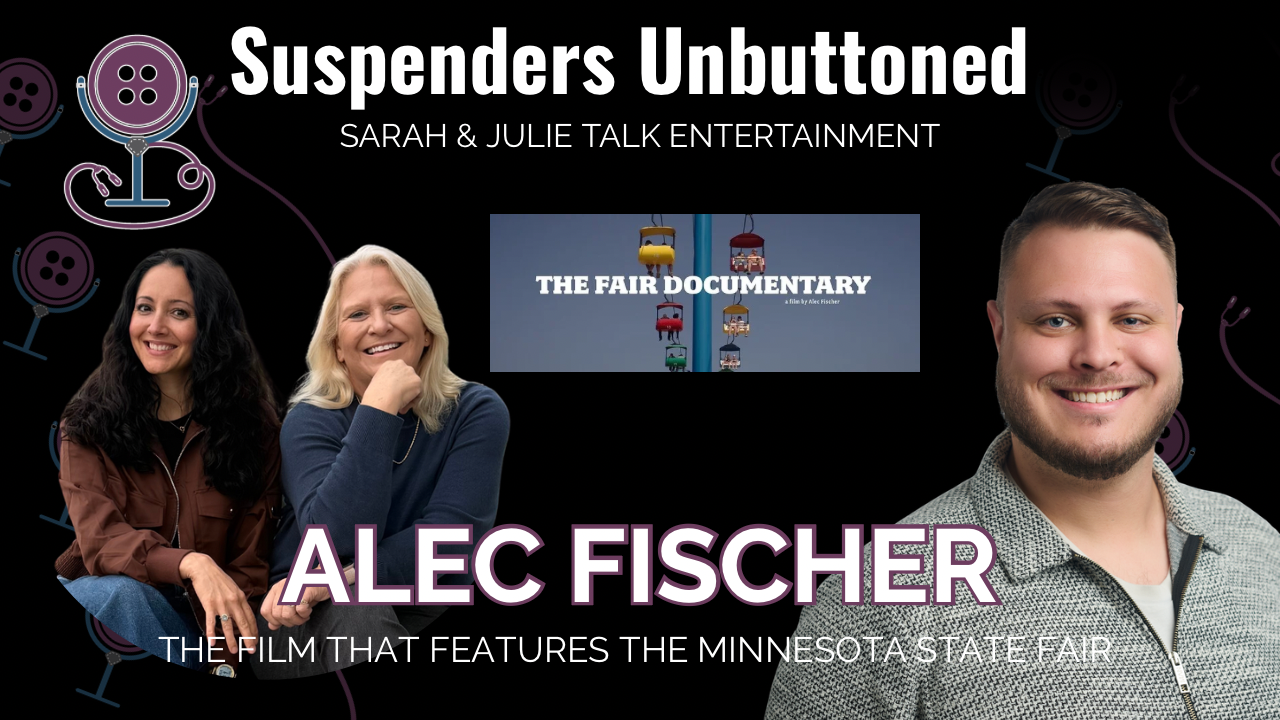
Fischer joined Suspenders Unbuttoned hosts Sarah and Julie to explain how his team made the Minnesota State Fair not simply the setting, but the main character.
One day constructed from three years of filming
THE FAIR uses an observational documentary style. There are no formal interviews and no archival passages explaining what viewers are seeing. Instead, the camera places audiences inside the experience and lets the sounds, movements, people, and spaces of the fair tell the story.
That choice created an enormous research challenge. Fischer estimated that he spoke with 10 to 25 people each week during the project’s busiest research periods. The team considered roughly 500 storylines, evaluating whether each would be visually compelling, immediately understandable without an interview, and able to fit within the film’s daylong narrative.
The finished structure begins in the early morning, before the public arrives, and continues through opening, daytime traditions, closing, and the overnight reset. Certain people and places return, but the film does not trail one central subject from beginning to end.
“The fair itself is the main character,” Fischer explained.
The one-day framework gave the filmmakers a natural boundary. A broader timeline could easily have stretched into vendor selection, pre-fair setup, and countless other stories. Even with a single-day structure, building that cinematic day required three years of production.
Rare access behind the fair’s familiar surface
The documentary gave Fischer and his local Minnesota crew access that ordinary fairgoers and even many devoted fans have never experienced.
Viewers will see portions of the baking competition, including the first visual assessment that can eliminate an entry before judges ever taste it. With hundreds of submissions in popular categories, measurements and presentation matter. The film also captures details such as judges using spit cups so they can evaluate so many entries without becoming full or ill.
For co-host Julie, who has earned multiple Minnesota State Fair baking ribbons, this glimpse behind the judging process held particular significance. As she noted during the conversation, simply advancing far enough to receive feedback can be an accomplishment in a deeply competitive category.
Fischer’s team also filmed crop art, including the political and social commentary frequently embedded in artwork made from seeds. The contrast fascinated him: Minnesotans may have a reputation for avoiding direct confrontation, yet crop artists often express pointed ideas through a medium outsiders might initially dismiss as whimsical.
Other subjects range from workers and food preparation to sleeping children beside their animals, historic buildings, and a beloved vendor known as Larry the Peeler Guy, whom Fischer said was the project’s most frequently recommended hidden gem.
Preserving a changing place on film
The fairgrounds are a permanent site, but their atmosphere changes completely when the fair is underway. Fischer described the grounds as a micro-city, with historic architecture helping to create a powerful sense of place.
His team filmed inside spaces including the Coliseum, the Cattle Barn, and the 4-H building. Some were captured before renovations, preserving the appearance of spaces that will no longer exist in quite the same form.
The production used extremely wide anamorphic lenses, allowing the vast interiors and architectural scale to fill the screen. Fischer expects those images to be especially striking in a cinema, where audiences can absorb both the grandeur of the buildings and the density of the crowds.
The filmmaking also creates connections fairgoers might not ordinarily consider. In one sequence, the mechanics of antique printing equipment transition into the machinery of food production and then into food made by hand. The juxtaposition transforms recognizable fair activities into a larger meditation on work, craft, and repetition.
A documentary, not a commercial
Although the Minnesota State Fair helped the production connect with people and granted the necessary access, Fischer stressed that the documentary remained editorially independent.
The production did not accept funding from the fair, and fair leadership did not receive general editorial control. The organization could offer good-faith feedback after viewing a rough cut, while a very limited number of scenes filmed in sensitive spaces required review for security reasons.
Those boundaries allowed the team to create a film that was neither promotional content nor an investigative “gotcha” project. The observational approach presents what unfolds, with every included moment selected because it contributes to the film’s themes and narrative.
The radical joy of gathering
Beneath the food, competitions, and spectacle is a broader question: what does it mean for so many people to gather in one place?
Fischer sees the fair as one of the remaining American events of its scale where the experience only works because people from across the state participate. Rural and urban communities meet on common ground, agriculture receives a sustained public spotlight, and multiple generations encounter one another through animals, art, food, and curiosity.
He also wanted to show Minnesota without applying a lens of violence. While the state has appeared in national coverage surrounding significant social issues, THE FAIR offers another honest portrait: people gathering through laughter, agriculture, artistic expression, competition, work, and joy.
That does not mean the film ignores the overwhelming scale of the event. It balances packed thoroughfares with intimate pauses. Including workers taking breaks and children resting beside their animals. For people who find crowds difficult, the documentary may offer a way to experience some of the fair’s energy without physically entering it.
The fair’s appeal may also reveal something about the present cultural moment. Fischer believes visitors are craving experiences that feel genuinely authentic rather than carefully manufactured to appear authentic. The fair has commercial elements, but its identity still grows from real traditions, rural life, handmade work, family rituals, and the temporary community created by everyone who shows up.
What comes next for THE FAIR
At the time of the interview, Fischer said the plan was to take THE FAIR on a film-festival tour during the first six months of 2027, followed by a theatrical release. The initial theatrical focus will be Minnesota before expanding to other national and international markets. Exact dates had not yet been announced.
Audiences can follow @thefairdocumentary on Instagram, Facebook, and TikTok. Fischer recommends joining the newsletter at thefairdocumentary.com for future festival, theatrical, and local screening details.
And for anyone wondering where Fischer stands on the fair’s most serious questions: he usually chooses a Pronto Pup, loves the grandeur of the Cattle Barn, pairs a frozen cider pop with the crop-art line, and plans to become a crop-art hobbyist once the documentary is complete.
Watch our interview with Alec Fischer on YouTube or listen to it anywhere you stream podcasts! Have you ever been to the Minnesota State Fair? Let us know in the comments or send us a message on Instagram!